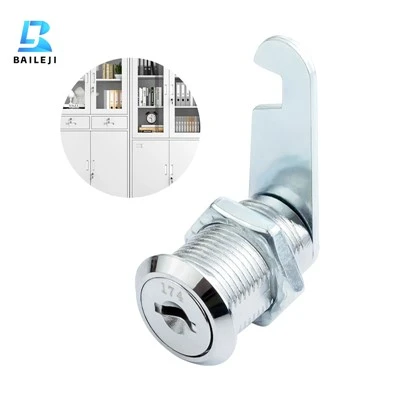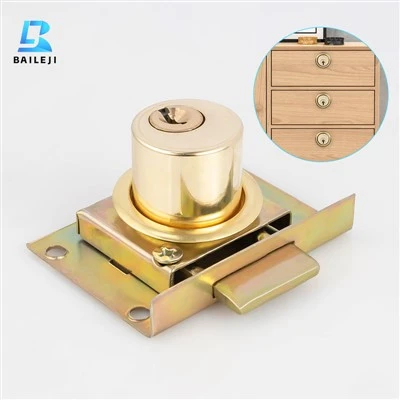
Locks emerged almost simultaneously with private ownership.
As early as 3000 BC, wooden locks mounted on timber-framed buildings were found in the Yangshao culture site in China. During the Eastern Han Dynasty, the technology of Chinese iron three-spring locks had reached a considerably high level. Three-spring locks were used for over 1000 years.
In the early 18th century, the Englishman D. Porter invented the cam-type rotary lock. The number of key codes increased from over 20 for three-spring locks to over 80. In the mid-19th century, European manufacturers modified the cam-type and three-spring locks into sliding rotary locks, with up to 1600 different key codes.
In 1848, the American L. Yale invented the pin tumbler lock using cylindrical pins, which has become the most widely used lock in the world. Modern pin tumbler locks have undergone further structural development, with the emergence of two-way, three-way, and four-way pin tumbler structures, as well as flat, double-sided, multi-sided, double-row double-sided, multi-row multi-sided pin tumbler structures and combined pin tumbler structures. This has greatly improved the security of the locks, increasing the number of lock designs from the original 2,500 to millions through variations in "direction" and "surface."
In the 1970s, with the application of microelectronics technology, magnetic locks, voice-activated locks, ultrasonic locks, infrared locks, electromagnetic locks, electronic card locks, fingerprint locks, iris locks, and remote control locks appeared. These locks possess a level of security unmatched by mechanical structures. Modern locks can also achieve program control of the system according to a set logical relationship within a specific system. Modern locks can be classified according to materials, uses, whether they have keys, security features, and structures.
Especially useful in public places, offices, and homes.