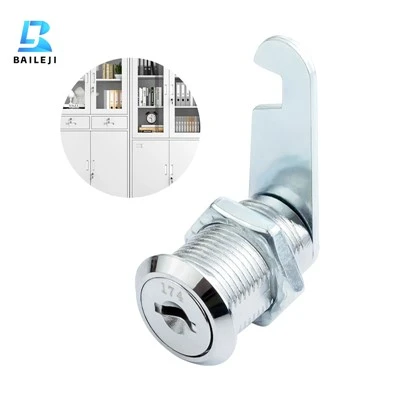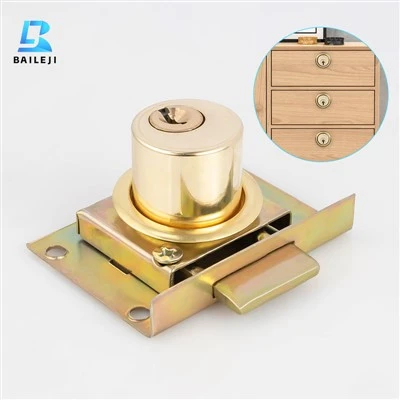
The working principle of a mechanical lock mainly relies on the cooperation of the lock cylinder, bolt, and key, as well as the mechanical action of pins and springs.
The lock cylinder is the core component of a mechanical lock, containing multiple springs and pins. The lock cylinder is where the key is inserted and is the key part of the lock; its design ensures that only the correct key will trigger the corresponding changes in its internal mechanical structure.
The key has specific grooves and shapes that match the pins inside the lock cylinder. When the key is inserted into the lock cylinder, the shape of the key causes the pins to rise to the correct position. If the shape of the key does not match the pins inside the lock cylinder, the pins cannot be lifted correctly, and the lock cylinder cannot rotate.
The pins are located inside the lock cylinder, usually two or more, at different heights. Each pin has a spring that pushes it towards the top of the lock cylinder. Without a key, these pins remain in one position, preventing the lock cylinder from rotating. When the correct key is inserted, the shape of the key causes the pins to rise to the dividing line of the lock cylinder, thus allowing the lock to rotate.
The bolt is the part of the lock that extends out from the door lock; it's responsible for locking or unlocking the door. When the lock cylinder is rotated, the bolt moves accordingly. When locked, the bolt extends out of the door frame, preventing the door from opening; when unlocked, the bolt retracts into the lock, allowing the door to open.
The unlocking process is as follows: When the correct key is inserted into the lock cylinder, the shape of the key lifts the pins until they are at the same level as the lock cylinder. Once all the pins are properly lifted, the lock cylinder can rotate freely. Rotating the lock cylinder pushes the bolt back, allowing the door to open.
The locking process is as follows: When the key is removed, the spring pushes the pins back to their original position, locking the lock cylinder and the bolt, ensuring the door cannot be opened.
Through this series of mechanical actions, mechanical locks effectively provide security. Due to their simple structure and reliability, mechanical locks are still widely used in many situations.