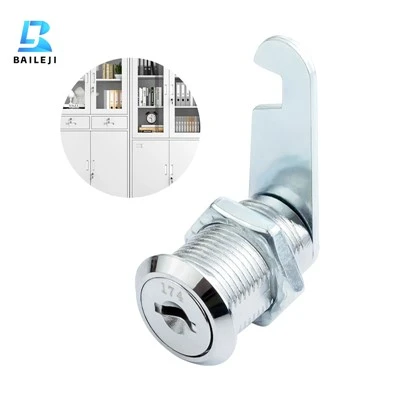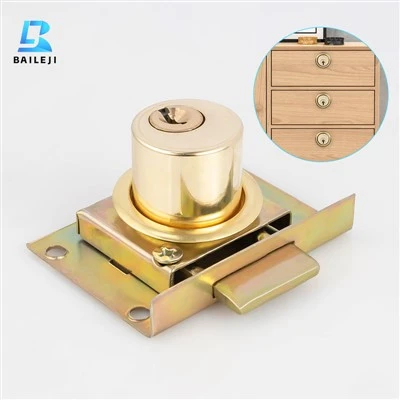
Padlocks have diverse and complex structures. Below are some common padlock structures and their characteristics:
Tumbler lock: This type of padlock has cylindrical pins of varying lengths installed inside the lock cylinder. When the key is inserted and turned, the pins are pushed to the corresponding height. If the boundaries of all the pins are level with the circumference of the lock cylinder, the cylinder rotates, and the lock opens.
Leaf lock: This type uses sheet-like metal pieces of different shapes as obstacles. The key rotates these blades to match and unlock the lock.
Magnetic Structure: Based on the principle of attraction between opposite poles and repulsion between like poles in magnets, a magnetic lock cylinder system is employed. When a slotless magnetic key is smoothly inserted into the lock cylinder slot and rotated, the key generates a repulsive force against the metal partition, thereby opening the lock.
Interlocking Structure: Consists of a main lock and auxiliary locks, which are interconnected. The main lock can only be opened by simultaneously opening and removing both auxiliary locks.
Numbering Structure: The lock body housing is equipped with a sliding plate mechanism, whose holes and slots are connected, allowing it to move and rotate. By dialing the correct numbers on the number dial, the lock can be opened automatically.